

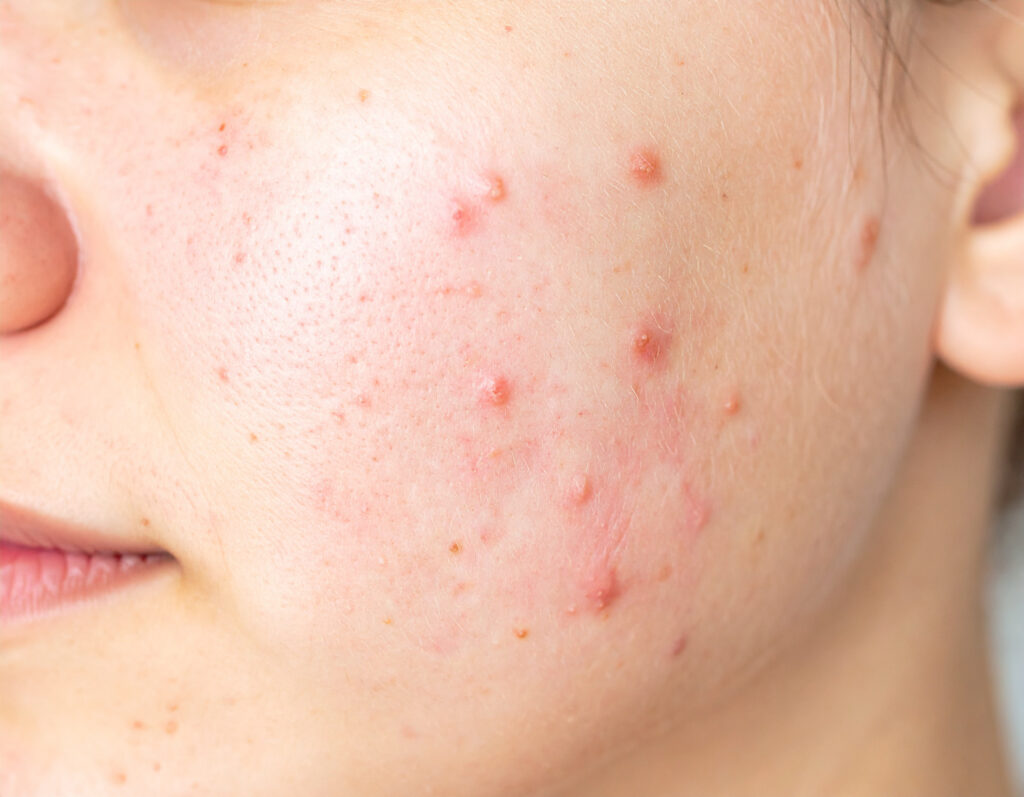
Isotretinoin for severe acne
Isotretinoin (often called “iso”) is one of the most effective treatments for severe acne. It works by reducing sebum production, reducing inflammation, and affecting how skin cells turn over. This produces amazing results for severe acne, but it also leaves the skin sensitive and dry both during and after treatment.
What happens to the skin during iso treatment?
To understand why the skin behaves differently both during and after treatment, we need to look at what is actually happening in the skin.
Sebum production is reduced
Sebum consists of skin-identical lipids that play a crucial role in:
- preserve moisture
- protect against irritation
- support a healthy and balanced skin flora
When isotretinoin significantly reduces sebum production, this is an important part of why the treatment is so effective against acne. At the same time, the skin loses part of its natural protective system and will become drier, more sensitive and more reactive to external influences. Protecting the skin with sunscreen and lubricating the skin is important to be able to carry out the treatment.
Altered cell renewal and increased sensitivity
Isotretinoin affects how skin cells (keratinocytes) mature and shed. This helps reduce clogged pores, but it also has a downside.
The epidermis — the outermost layer of the skin — becomes more vulnerable. This makes the skin more sensitive to:
- sunlight
- cold and wind
- friction
- ingredients the skin normally tolerates (such as certain preservatives and perfumes)
In addition, the skin's ability to recover from stress, weather changes or improper skin care can be reduced. Many people therefore find that their skin "tips over" more easily when irritated.
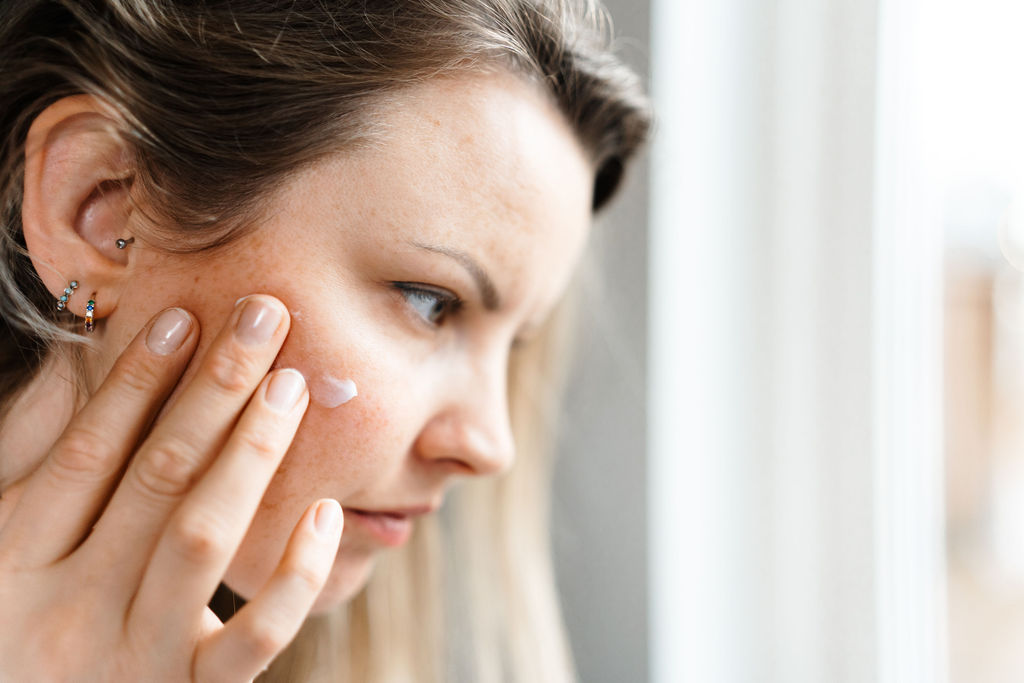
What happens to the skin during treatment with isotretinoin?
Although isotretinoin provides fantastic results for many, the treatment puts the skin in a more vulnerable state, both during and afterwards.
This means that the skin needs:
- more gentle treatment
- support for the skin barrier
- fewer potentially irritating ingredients
- time to rebuild
Understanding these mechanisms makes it easier to adjust skin care and expectations and, not least, avoid “overtreating” skin that really needs rest.
Skin care during and after isotretinoin
During isotretinoin treatment, the skin gradually becomes drier and more sensitive. Avoid products with perfume, essential oils, acids, retinol and other active ingredients that are known to make the skin more sensitive. The skin's recovery continues long after the treatment has ended. The focus should be on strengthening and rebuilding the skin barrier. Skin care cannot replace medication, but can contribute to better conditions for the skin and reduce relapses. Ingredients such as ceramides, squalane, ectoine and zinc are great for calming and strengthening the skin barrier.
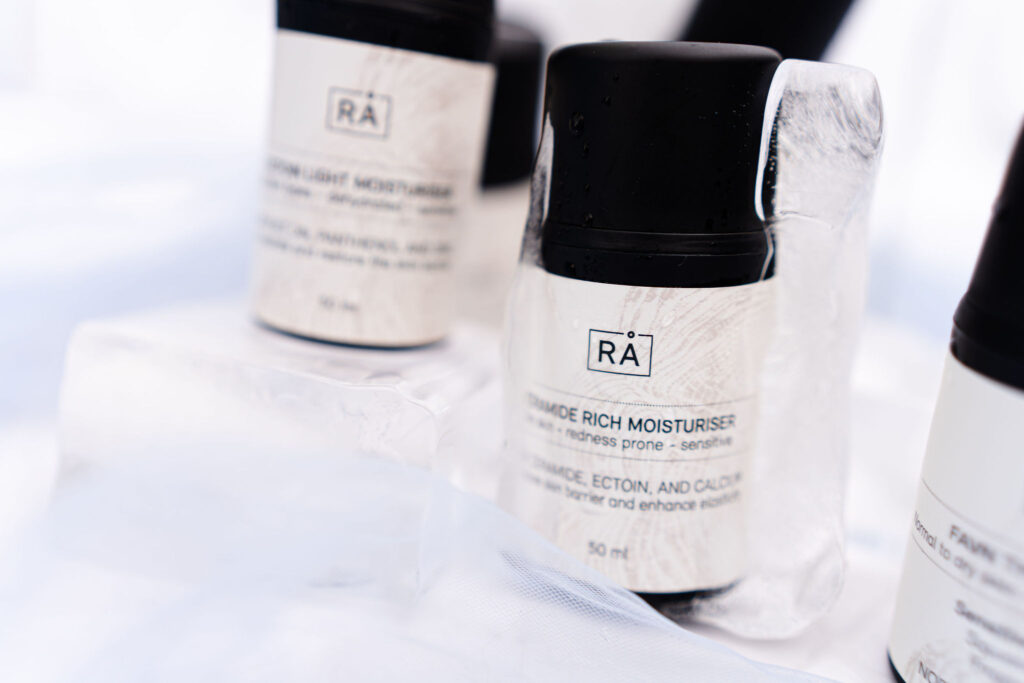
During treatment with isotretinoin, we recommend using Pure lipid cleanser and Ectoin light moisturizer . In addition, it is important that you use a good, fragrance-free sunscreen.
We have good experience with Pure lipid cleanser , Barrier Care Cleanser and Ectoin Light moisturiser in the post-iso period. The products are gentle on the skin and contain soothing ingredients such as zinc, ectoin and squalane.
Relevant articles
Sensitive skin?
What is it and what can help?
What is fresh skincare?
Why should I choose fresh skincare?