Rosacea: Symptoms, Causes, Triggers, and Treatment – Complete Guide
Rosacea is a common, chronic skin condition that often causes facial redness, visible blood vessels, and sometimes pimple-like breakouts. The condition can vary greatly from person to person – some people experience mostly redness and flushing, while others get small bumps and inflammation that resemble acne.
In this guide, you will get an overview of symptoms, what can trigger rosacea, and what usually helps – both in terms of skin care, lifestyle, and medical treatment.
Contents :
- What is rosacea?
- Symptoms of rosacea
- Who gets rosacea?
- Different types of rosacea
- Why do people get rosacea?
- The skin barrier – why it is so important
- Common triggers
- Treatment of rosacea
- Skin care for rosacea
- Ingredients that can help
- Ingredients many people react to
- Sun protection and rosacea
- Diet and lifestyle
- Frequently Asked Questions
What is rosacea?
Rosacea is an inflammatory skin condition that primarily affects the face, especially the cheeks, nose, chin and forehead. Many people experience that the skin becomes more reactive and more easily irritated than before, and that redness comes and goes – often triggered by triggers such as heat, sun, stress or alcohol.
Rosacea is considered chronic, but with the right treatment and routines, symptoms can often be kept well under control.
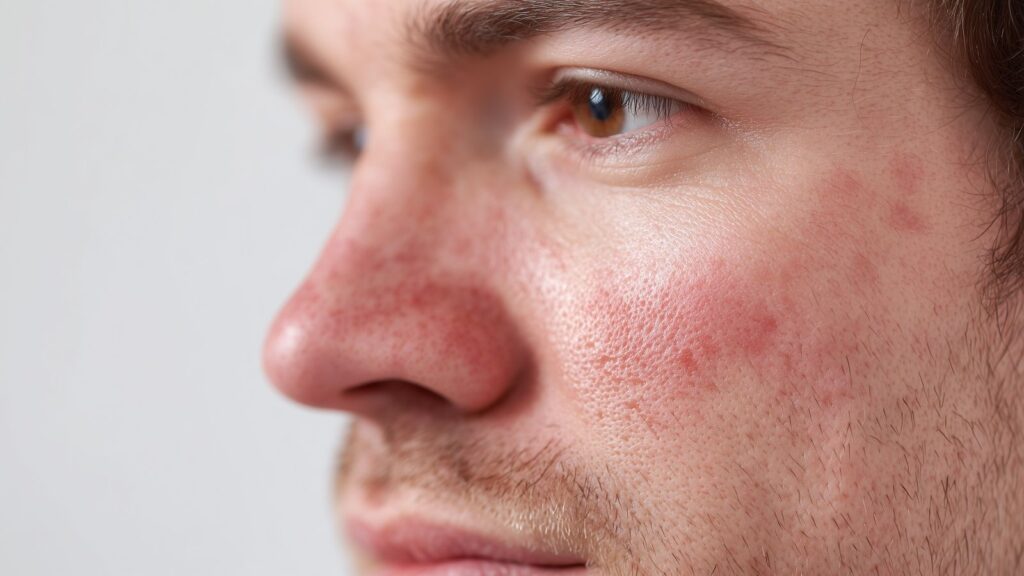
Symptoms of rosacea: what does it look like?
Here are some of the most common symptoms of rosacea. Do you recognize any of these? If your skin does not calm down, it may be a good idea to visit a doctor and get a referral to a dermatologist. There are often long waiting times at a dermatologist, so don't wait too long if you have a lot of problems.
The most common symptoms of rosacea are:
- Persistent redness of the face (especially cheeks and nose)
- Flushing (sudden redness that comes in waves)
- Visible blood vessels (burst blood vessels/“threads”)
- Pimples and inflamed acne (without blackheads)
- Stinging, burning, or prickling of the skin
- Dehydrated and sensitive skin with a weakened skin barrier
- Eye problems (irritation, dry eyes) in some people – this could be ocular rosacea
What causes rosacea?
There is no single cause, but rosacea may be linked to:
- Genetics
- Overactive immune system/skin inflammation
- Weakened skin barrier and increased reactivity
- Disease, medications
- Imbalance in the gut
- Microorganisms on the skin (e.g. Demodex mites may play a role in some)
Important: Rosacea can resemble both acne and perioral dermatitis. If you are unsure what you have, or if your symptoms get worse, it is a good idea to get an evaluation from a doctor/dermatologist.
Who gets rosacea?
Rosacea most often occurs in adults between the ages of 30 and 60, but can develop both earlier and later.
The risk appears to be higher if you:
- have fair skin
- have family members with rosacea
- turns red in the face easily
- have sensitive skin
- have had a lot of sun exposure throughout their lives
Rosacea affects both women and men. Women are diagnosed more often, while men more often develop thickened skin on the nose (rhinophyma).
Different types of rosacea
Rosacea is often divided into different subgroups, and many have a combination of:
1) Redness-dominated rosacea (flushing and burst blood vessels)
Here, redness, a feeling of warmth and visible blood vessels are the most prominent.
2) Papulopustular rosacea (pimples and inflammation)
Causes pimple-like eruptions, often on the cheeks and nose – but typically without blackheads, which is common with acne.
3) Thickened skin (phymatous rosacea)
Most commonly known as nasal thickening. This is less common.
4) Eye rosacea
Causes irritation, red eyes, burning and a feeling of sand in the eye. This should be evaluated by a doctor if you suspect it.
Why do people get rosacea?
The exact cause is still unknown. What we do know is that several mechanisms appear to play a role.
Genetic predisposition
Rosacea has a hereditary component. Many have close family members with similar symptoms.
An overactive immune system
People with rosacea often have a stronger inflammatory response in their skin than others. The skin reacts more easily to influences such as heat, UV radiation and irritation.
Blood vessels react more easily
The blood vessels in the face dilate more easily than normal. Over time, they can become permanently visible.
Nervous system
The nerves in the skin may be more sensitive to temperature, spicy foods, and emotional stress, contributing to flushing and discomfort.
Demodex
In some people with rosacea, there are increased amounts of the skin mite Demodex folliculorum . This does not necessarily mean that the mite is the cause, but it may contribute to inflammation in some people.
The skin barrier – the key to calmer skin
This is perhaps the most important part of the entire guide.
Many people think of rosacea as a blood vessel problem. In reality, many people also have a weakened skin barrier.
The skin barrier is the skin's outermost protective layer. It retains moisture and protects against irritants, microorganisms and pollution.
When the skin barrier is weakened:
- the skin loses more water
- irritants penetrate more easily
- the skin becomes more sensitive
- the immune system is activated more easily
- redness and burning may worsen
This explains why many people with rosacea react to products that others tolerate well.
Supporting the skin barrier is therefore often an important part of self-care, although it does not replace medical treatment when necessary.
Common triggers: this can aggravate the skin
Rosacea triggers vary from person to person, but some are recurrent.
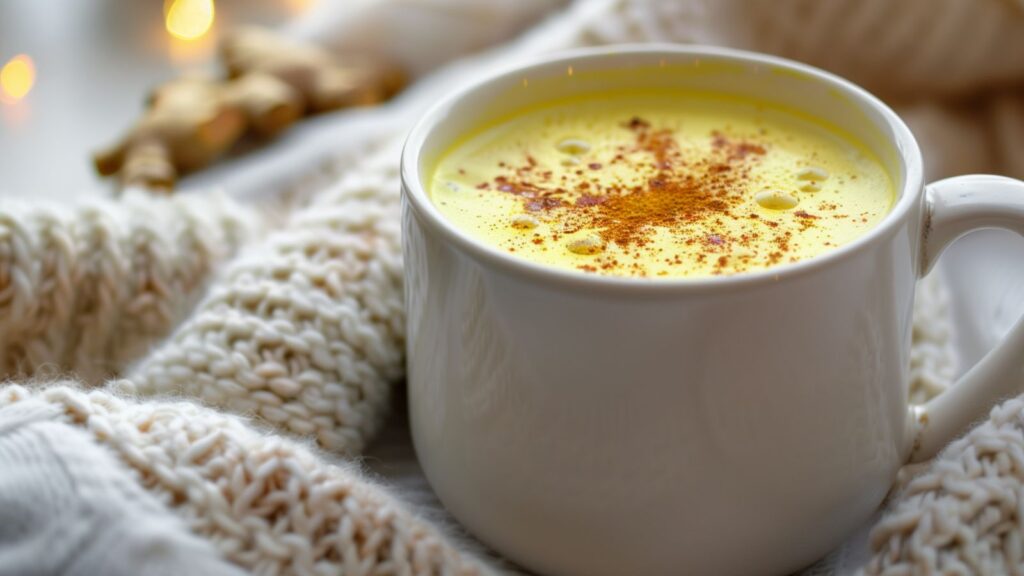
- Caffeine: Coffee, matcha, green tea, black tea. Try herbal tea and Golden Latte instead.
- Sugar (artificial sugar imitation and regular), wheat flour and other fast carbohydrates. Another good reason to cut out sugar.
- Emotional triggers such as stress, anger, frustration.
- Perfumed skin care products, retinol, harsh acids. Both natural and artificial fragrances can trigger rosacea. Keep your skin care regimen simple with few products if you have symptoms of rosacea.
- Strong sun, and strong heat/cold. Be careful with extreme heat or cold. Wear a cap and stay in the shade between 12-15.
- Hormones are a big trigger for rosacea.
- Alcohol. Especially red wine.
- Illness and medications affect the entire body including the skin.
How is rosacea treated?
Treatment depends on the symptoms you have and how severe they are. We often recommend a combination of several measures to bring your skin back into balance.
It may include:
- gentle skin care
- sun protection
- identification of triggers
- Adjustment of diet. Please seek help from someone with a degree in nutrition.
- prescription creams or gels
- antibiotics in tablet form in some cases
- laser or IPL for persistent redness and visible blood vessels
A dermatologist or family doctor can help assess whether you need medical treatment in addition to working on the other factors.
Skin care for rosacea
Skin care cannot cure rosacea, but a simple and gentle routine can help reduce irritation and support the skin barrier.
A good routine often consists of:
- mild cleanser
- moisturizer with barrier-building ingredients
- broad-spectrum sunscreen SPF 30–50, sun hat, cap when you are out in strong sun.
It is usually better to use a few products that the skin tolerates well than many active products at the same time.
Ingredients that are often well tolerated
Many people with rosacea benefit from ingredients that strengthen the skin barrier and reduce irritation, but the skin reacts individually.
Examples are:
- ceramides
- ectoine
- glycerin
- panthenol
- squalane
Some may also benefit from azelaic acid or niacinamide, while others need to introduce such ingredients gradually.
Ingredients many people react to
Not everyone reacts the same way, but many experience increased irritation from:
- perfume
- some preservatives
- essential oils
- rough scrubs
- exfoliating acids
- retinoids during outbreaks and without gradual habituation
This does not mean that these ingredients are "dangerous", but that reactive skin may have lower tolerance.
Sun protection for rosacea – find the balance
For many people with rosacea, sun and heat are common triggers. Heat can dilate blood vessels and lead to flushing and more persistent redness.
At the same time, we don't need to be afraid of the sun. Recent research suggests that moderate sun exposure can have several positive effects on health, including through its influence on circadian rhythms, mood, and biological processes that are still being researched. Several large studies from Northern Europe have also found a link between moderate sun exposure and a lower risk of premature death, but the researchers emphasize that the link does not necessarily mean that the sun alone is the cause.
The goal is therefore not to avoid the sun completely, but to protect the skin from strong UV radiation and heat – without giving up an active life outdoors.
Sun protection is about more than sunscreen
The best sun protection is often a combination of several measures:
- seek shade when the sun is strongest
- wear a sun hat or cap
- sit under a parasol when possible
- choose walks in the forest or other places with natural shade
- deliberately avoid tanning your face
Many people with rosacea find that these simple measures keep their skin calmer than sitting in direct sunlight for long periods of time.
What about sunscreen?
Sunscreen is an important aid, but not the only form of sun protection. Many people with rosacea find that some sunscreens sting or irritate the skin.
Therefore, choose a sunscreen that:
- is fragrance-free
- is developed for sensitive skin
- feels comfortable on the skin
- does not increase redness or burning
Some people prefer mineral sunscreens, while others tolerate modern chemical UV filters better. There is no one-size-fits-all answer – the best sunscreen is the one your skin actually enjoys and that you want to use.
Live with your skin – not against it
Rosacea doesn't mean you have to stay indoors on nice days. On the contrary, it can be good to be outside, move around and enjoy nature. A walk in the woods, a break in the shade or a cup of coffee under a tree can be just as valuable as a day at the beach – and often much kinder to the skin.
The goal is not to fear the sun, but to find a balance that keeps both the body and the skin healthy. For most people with rosacea, this means protecting their face from strong sun and heat, while continuing to live an active life outdoors.
Diet and lifestyle
Can the gut affect rosacea? In recent years, researchers have become increasingly interested in what is called the gut-skin axis – the connection between the gut, the immune system and the skin.
Several studies have found that people with rosacea are more likely to have gastrointestinal problems such as irritable bowel syndrome (IBS), inflammatory bowel disease, or other digestive issues than the general population. This doesn't necessarily mean that gut problems are the cause of rosacea, but it does suggest that the gut and skin may affect each other in some people.
Over the years as a skin therapist, I have also met many clients with rosacea who also talk about IBS, bloating or sensitive digestion. Although we cannot draw firm conclusions, it can be helpful to see the skin and the rest of the body in context.
Eat as many clean ingredients as possible
A diet rich in vegetables, fruits, berries, legumes, whole grains, nuts, fish and healthy sources of fat provides the body with the nutrients it needs to support normal skin function and a well-functioning immune system.
For most people, a varied diet with as few ultra-processed foods as possible will be a good starting point.
That doesn't mean you can never eat cake or pizza. The whole thing over time is more important than individual meals.
Foods that can trigger rosacea
Some foods are known to trigger flushing or worsen symptoms in some people.
Common triggers are:
- strong and spicy foods, such as chili
- alcohol, especially red wine in some
- very hot drinks
- foods with high acid content, which some people react to
- foods that you personally experience cause increased redness or discomfort
This doesn't mean that everyone with rosacea needs to avoid these foods. Many people tolerate them well. The most important thing is to get to know your own reactions.
Lifestyle affects more than you might think
Rosacea isn't just about what you put on your skin. How you live can also affect how your skin feels.
Many people find that their skin becomes calmer when they:
- get enough sleep
- handles stress better
- are physically active in a way that suits them
- spending time outdoors in nature
- eat regular and nutritious meals
- takes care of both mental and physical health
Small changes over time can often have a greater impact than quick fixes.
READ ALSO
Golden Milk: rosacea-friendly recipe